
ALGYL GGP
Preparation and activation
Optimisation of the intra-articular environment (HA viscosupplementation), activation of cartilage metabolism and support of proteoglycan synthesis.

This website contains professional and promotional information about medical devices, intended primarily for healthcare professionals and staff of healthcare service providers.
The content of this site assumes the appropriate professional knowledge. Other persons may misinterpret information on intended purpose, indications, contraindications, safety or use. Incorrect interpretation or use of a medical device without professional assessment may be associated with health risks.

The first intra-articular injection combining four bioactive components in a patented formulation, targeting multiple pathogenetic processes of gonarthrosis at once — in a single 2 mL syringe.
Traditional HA addresses only viscosupplementation. Yet osteoarthritis is multifactorial. Each component of ALGYL GGP targets a different pathogenetic factor — and their effects complement one another.
Synovial-fluid viscoelasticity, analgesia, chondrocyte stimulation.
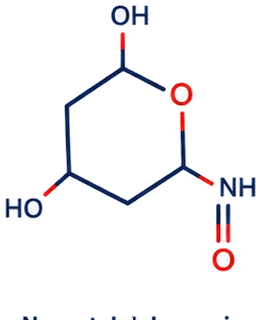
Stimulates proteoglycan and HA synthesis, inhibits matrix metalloproteinases.
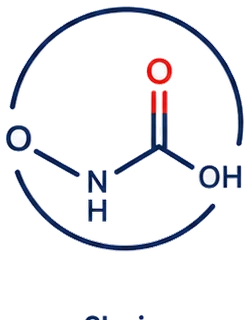
Essential for the stable collagen triple helix; antioxidant and anti-inflammatory effect.
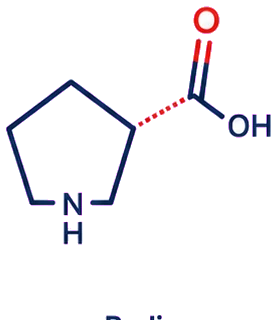
Key to collagen synthesis in chondrocytes, supports cartilage regeneration.
Hyaluronic acid is only one part of the product — the other components extend the formulation toward a longer, more comprehensive reparative effect.
Three regimens (HA / HA + proline / full ALGYL GGP combination) evaluated with WOMAC, Lequesne and VAS at week 12.
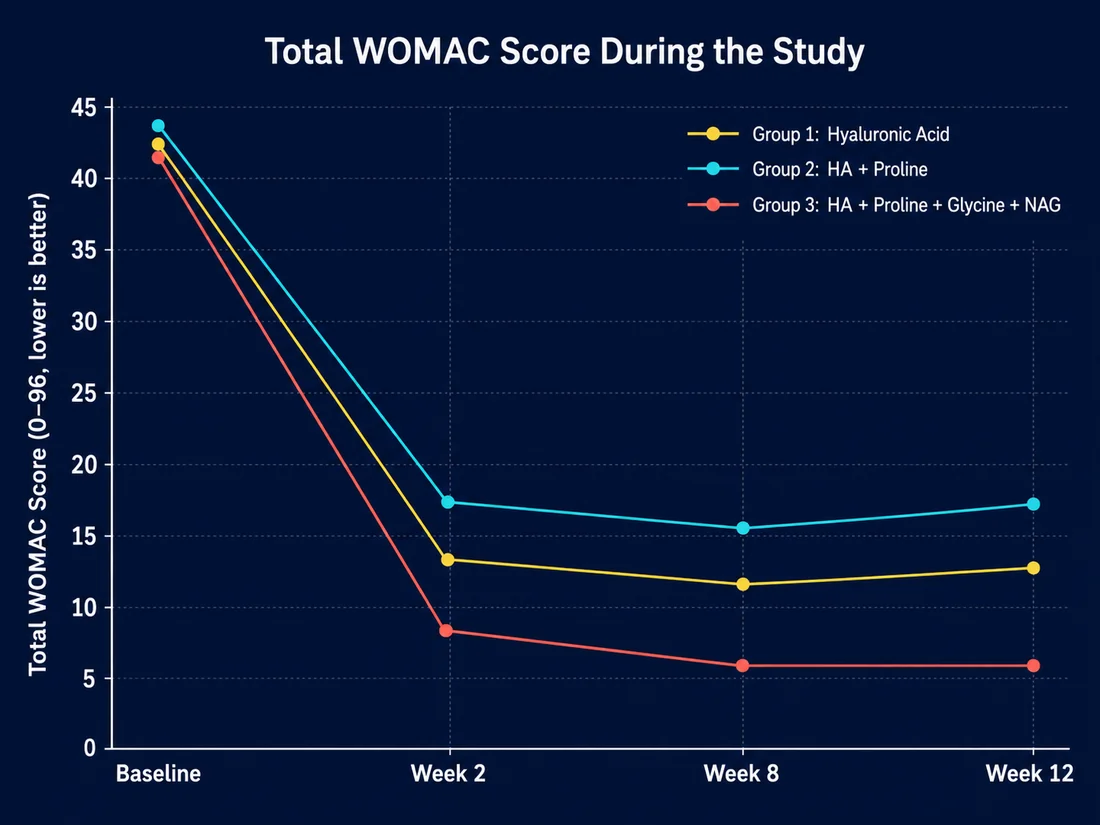
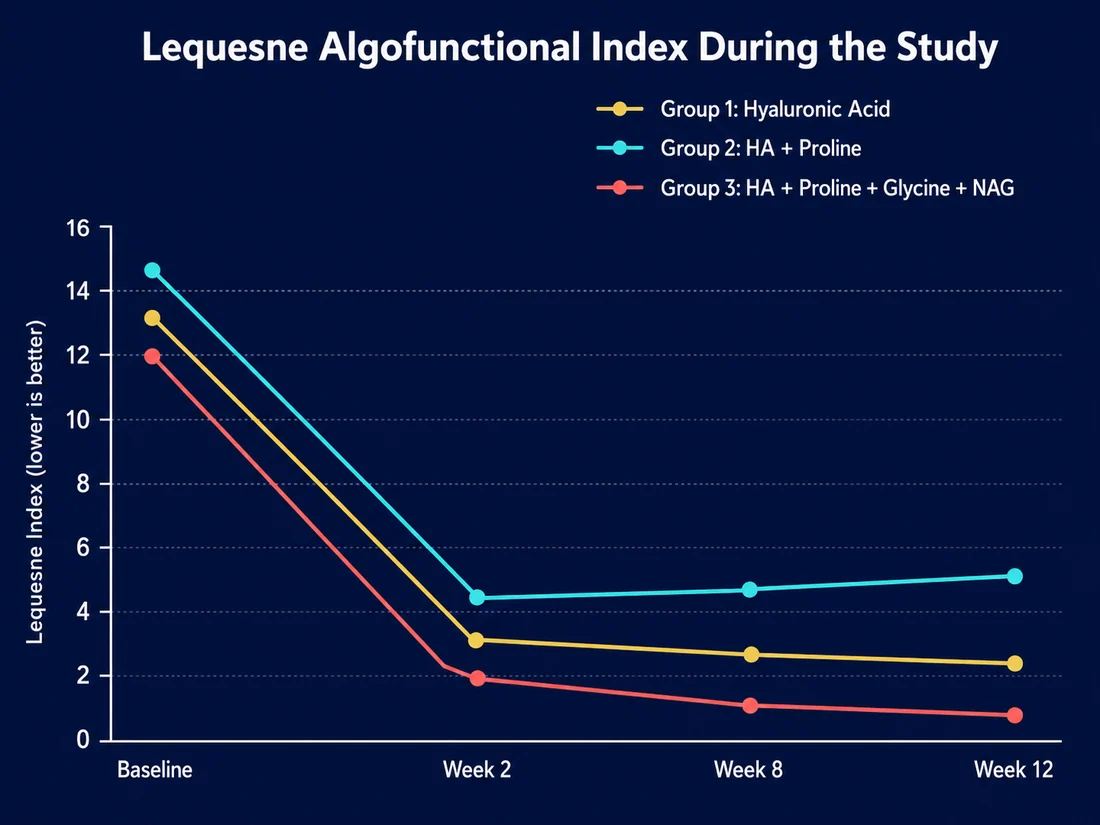
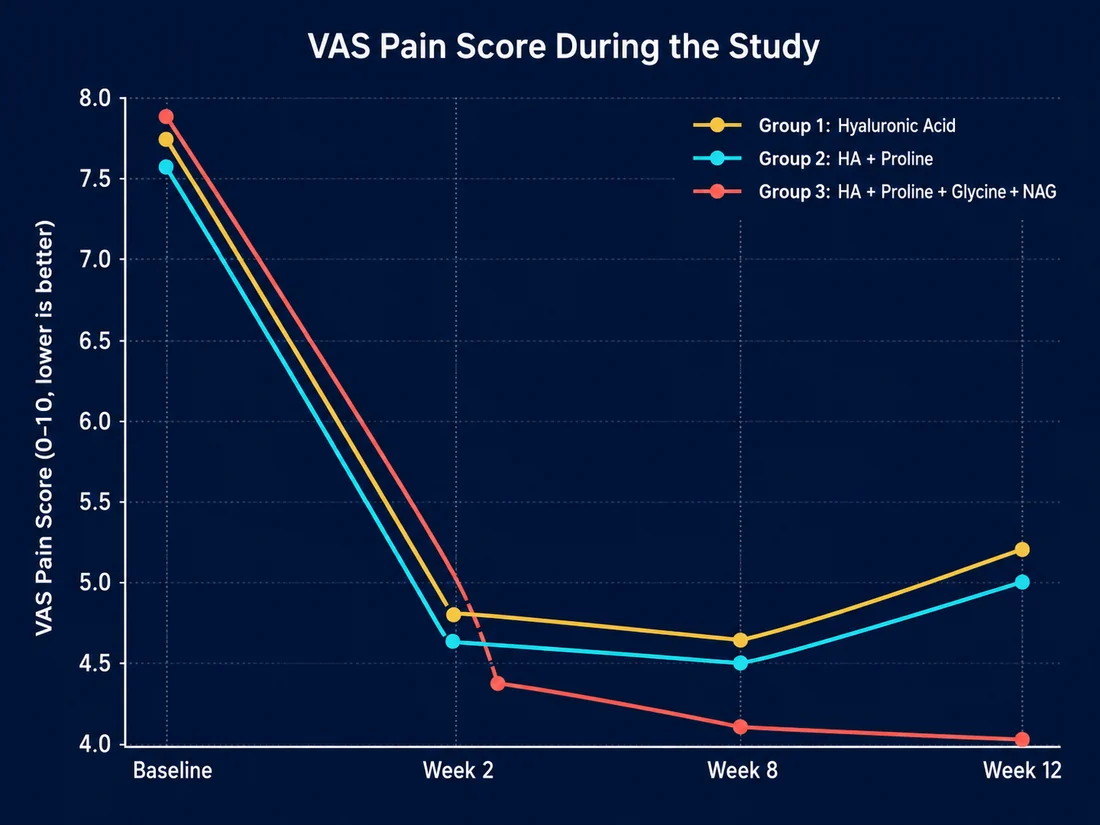
At week 12 the group with the four-component formulation reached statistically significantly better WOMAC, VAS and Lequesne index values than both comparator groups (p<0.001 for WOMAC and VAS, p<0.05 for Lequesne). Improvement continued between weeks 8 and 12, whereas in both comparator groups some patients deteriorated again during this period.
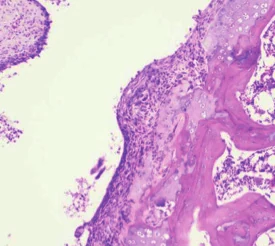
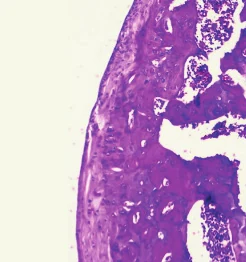
A laboratory study demonstrated that, in the treatment of knee osteoarthritis, ALGYL GGP is significantly more effective than single-component hyaluronic acid or saline and leads to regression of degenerative cartilage changes (Gök O., 2024). In orthopaedic practice, ALGYL GGP has been used in more than 200,000 applications in gonarthrosis and has proved effective and safe, with a long-lasting effect. The safety report confirms that no adverse events occurred with administration of the product, such as joint pain or swelling, injection-site reactions or other complications.
applications in orthopaedic practice without reported serious adverse events.*
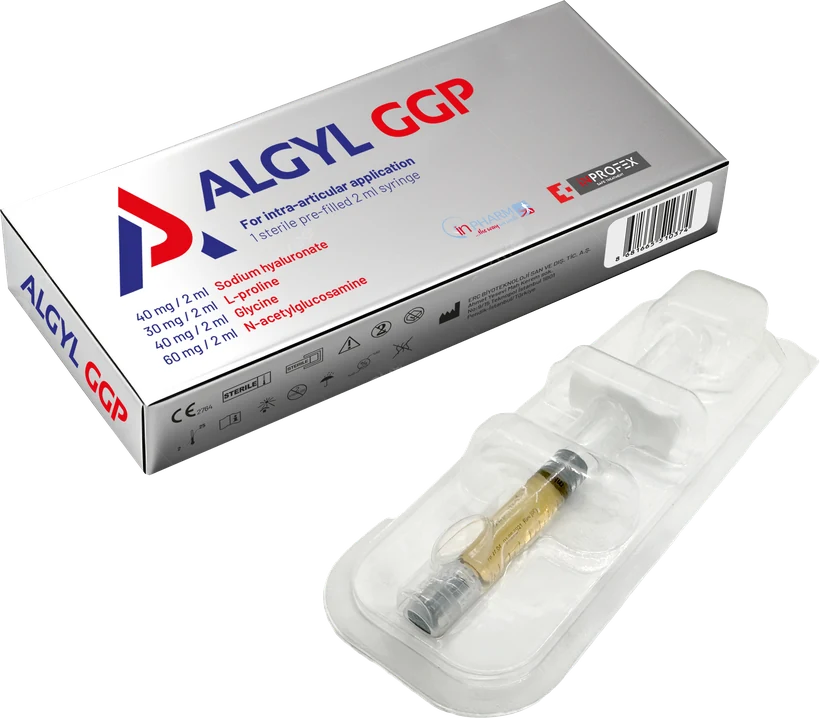
Sodium hyaluronate, N-acetylglucosamine, glycine and L-proline in one sterile pre-filled syringe for intra-articular use.

„The four-component combination of biogenic substances is a rational extension of the intra-articular approach in gonarthrosis.“
Prof. Dr. habil. Pavel Dufek has long specialized in orthopaedics, trauma surgery and sports medicine. This expert comment reflects the author's clinical view — it does not replace the clinical-study results or the current IFU.
The medical device ALGYL GGP is intended for the treatment of symptoms of joint disorders such as osteoarthritis. It is indicated to increase viscoelasticity and for cartilage-tissue reconstruction or to supplement synovial fluid in joints.
The specific choice, dosage and frequency are always determined by the treating physician based on the patient's condition and current IFU.
Complete information on use, contraindications, warnings and possible adverse events is provided in the current instructions for use.
A professional proposal for a combined approach that respects the individual phases of joint tissue repair. The approximate interval between the main steps is 2–3 weeks.
Optimisation of the intra-articular environment (HA viscosupplementation), activation of cartilage metabolism and support of proteoglycan synthesis.
Continued viscosupplementation and recombinant collagen as a structural component for regeneration of the extracellular matrix.
We will put you in touch with the inPHARM specialist representative for your region — with complete documentation, clinical evidence and a tailored offer.
I’m interested — contact a representative